How to Remove Deep Stains From SUV Interior
Table of Contents
- Step 1: Gather Your Tools and Prep the SUV Interior
- Identify Your Interior Materials Before Choosing a Cleaner
- How to Remove Stains From Car Seats: Fabric and Leather
- How to Clean SUV Carpet Stains and Floor Mats
- Choosing a Car Interior Stain Remover for Deep Stains
- When DIY Cleaning Is Not Enough: Professional Interior Detailing
- Preventing Deep Stains From Coming Back
- Frequently Asked Questions
Last Updated: October 8, 2026
Step 1: Gather Your Tools and Prep the SUV Interior
Learning how to remove deep stains from suv interior starts with the right setup, not the strongest chemical. Deep stains sit in layers, and each needs a different approach.
What You'll Need
- A wet/dry vacuum with a wide nozzle
- A soft detailing brush and a stiff brush for carpets
- Microfiber towels (at least six)
Vacuum Loose Dirt and Debris First
Loose dirt, sand, and crumbs turn into mud the moment liquid touches them. Vacuum every surface before any cleaner goes on. Work the nozzle into seat seams, seat rails, and the gap between the console and carpet. This one step prevents most stains from spreading deeper.
Spot Test Every Cleaner Before You Apply It
A spot test is the practice of applying a small amount of cleaner to a hidden area to check for color bleed or damage before treating the visible stain. Test under the seat or on a floor mat edge. Wait five minutes and check the towel. If color transfers, stop and switch products.
Identify Your Interior Materials Before Choosing a Cleaner
Material identification decides which cleaner you pick, and picking wrong causes permanent damage. Most SUV interiors mix at least three materials, fabric, leather, and vinyl, and often a fourth, synthetic suede or microfiber, on seat inserts and headliners. Each reacts differently to water, heat, pH, and agitation, so spend two minutes identifying what you are cleaning before you touch a bottle.
How to Tell Fabric, Leather, Vinyl, and Synthetic Suede Apart
A few quick checks separate the four surfaces:
- Fabric (cloth): Woven texture, visible threads, absorbs a drop of water instantly and darkens where it lands. Common on lower and mid trims, cargo walls, and headliners.
- Leather: Fine grain with irregular pores, slightly cool to the touch, flexes with a soft crease rather than a sharp fold. Real leather absorbs a water drop slowly and leaves a temporary dark spot.
- Vinyl (synthetic leather): Uniform pebble pattern with no pores, warmer to the touch, and a water drop beads on the surface instead of soaking in. Common on door panels, dash tops, and third-row seats in some trims.
If the surface is ambiguous, check the owner's manual or the tag under the seat. When you still cannot tell, treat it as leather and use the gentlest method, you can always go stronger on a second pass, but you cannot undo a bleached or cracked panel.
Match the Method to the Material
| Material | Safe Cleaner | Water Level | Agitation | Never Do This |
|---|---|---|---|---|
| Fabric / cloth | Diluted dish soap or a dedicated interior cleaner | Damp, not soaked | Soft or medium detailing brush | Soak the foam padding underneath |
| Leather | pH-balanced leather cleaner | Minimal, mist a towel, not the seat | Soft microfiber, light pressure | Scrub, or let water pool in stitching |
| Vinyl | Mild soap solution | Light wipe | Soft towel | Use solvent or alcohol-heavy cleaners that dry and crack it |
| Synthetic suede | Dedicated suede or foam cleaner | Very light | Soft brush, one direction | Saturate the nap or scrub against the grain |
Why pH and Heat Matter More Than Brand
Leather is mildly acidic and finished with a protective coating. Alkaline cleaners, many all-purpose degreasers and dish soaps, strip that coating over repeated use, leading to cracking and color loss months later.
Heat is the second variable. Steam and hot-water extraction are effective on fabric and carpet, but sustained heat can shrink, glaze, or discolor leather and some vinyl.
How to Remove Stains From Car Seats: Fabric and Leather
When you remove stains from car seats, the method matters more than the product. Fabric wants moisture and agitation; leather wants control and restraint.
Cleaning Fabric Seats and Upholstery
Apply your diluted dish soap or interior cleaner to a microfiber towel, not directly to the seat. Work it into the stain in small circles, let it sit two to three minutes, then blot with a clean, damp towel. Repeat in light passes rather than one heavy soak.
Cleaning Leather Seats Without Damage
Wipe leather with a leather cleaner on a soft towel, then dry immediately. Never scrub leather or let water pool in the stitching. Condition after cleaning to keep the surface supple and prevent cracking.
How to Clean SUV Carpet Stains and Floor Mats
Carpet holds more embedded soil than any other surface in an SUV, and an SUV has more of it than a sedan, a longer passenger footwell, a third-row floor, a deep cargo area, and often a removable cargo mat. Each zone collects different soil and needs a different approach.
Work the Zones in Order
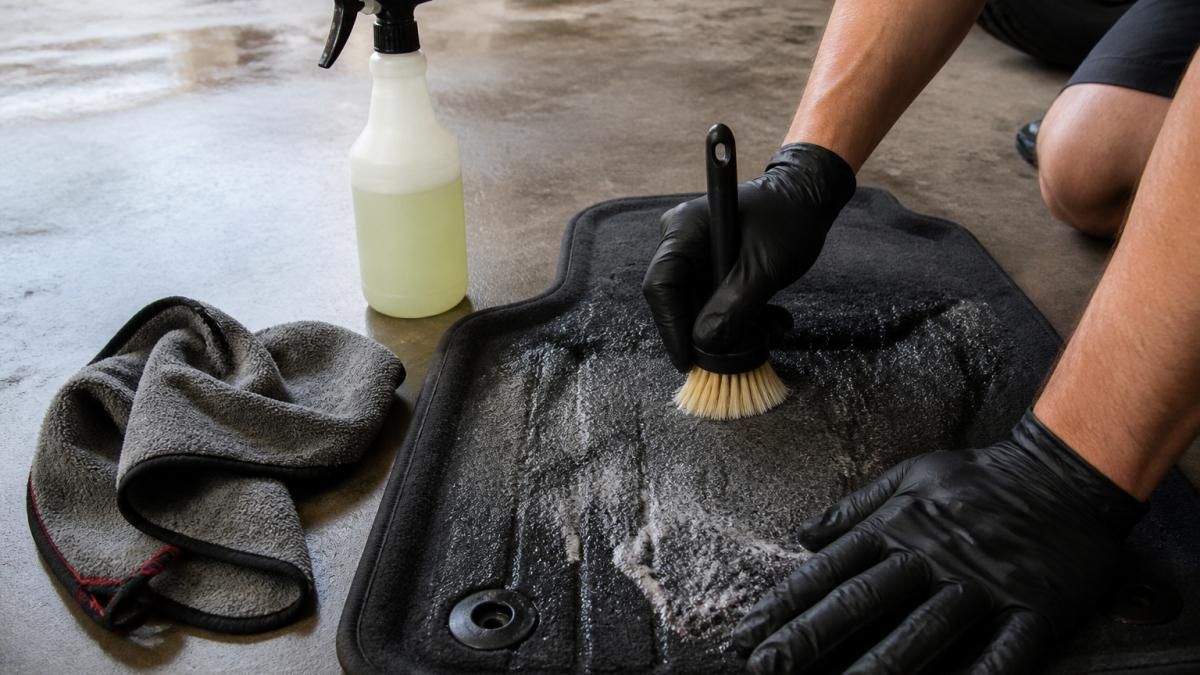
Pull every removable floor mat out first and treat them separately on a flat surface like a driveway or garage floor, which keeps runoff off the carpet underneath. Then work the fixed carpet in this order:
- Front footwells , highest traffic, most ground-in grit and food crumbs.
- Second-row footwells , kid and pet territory; expect crumbs, juice, and paw prints.
- Third-row floor , often folded and forgotten; usually dry dust and debris rather than wet stains.
- Cargo area and cargo mat , pet hair, groceries, sports gear, and the occasional leaked liquid.
Vacuum each zone thoroughly before any liquid touches it, loose dirt turns into mud the moment cleaner hits it, and mud pushes deeper into the pile.
Agitate Embedded Soil With a Detailing Brush
Spray your cleaner, then work it in with a detailing brush in short back-and-forth strokes. A drill brush speeds this up on large areas like the cargo floor and the third-row carpet.
For a large SUV cargo floor, work in two-foot squares rather than spraying the whole area at once. Cleaner that sits too long on the pile dries and re-bonds the soil you just loosened.
Extract Without Over-Wetting
Blot up the lifted soil with a clean towel, then run a wet vacuum or portable extractor over the area in two or three slow, overlapping passes.
If you do not own an extractor, a wet/dry shop vacuum with a wide nozzle works for the surface, but it will not pull water out of the foam padding.
Dry It Properly or You Will Grow Odor
Water that soaks into the padding takes days to dry and causes odor and mildew. After extraction, leave the carpet damp to the touch, not wet. Then:
- Prop the doors open and run a fan across the floor for several hours.
- Or run the AC on recirculate with the windows cracked to pull humidity out of the cabin.
- On a sunny day, park with the windows down and the carpet exposed to moving air, not direct sun on leather or vinyl.
Check the carpet the next morning. If it still feels damp, run another extraction pass. A damp pad is the single most common reason a cleaned interior smells worse a week later.
Floor Mats: Clean Them Off the Carpet
Removable mats are the easiest win in the whole interior. Take them out, vacuum both sides, spray with diluted dish soap or interior cleaner, agitate with a stiff brush, then rinse with a hose and hang to dry completely. Never put a damp mat back on carpet, the trapped moisture causes the musty smell owners blame on the seats.
Choosing a Car Interior Stain Remover for Deep Stains
The best car interior stain remover depends on what made the stain, not on brand names. Buy a general-purpose interior cleaner for everyday messes, add a targeted product for tough ones, and remember mild soap and water handle most fresh spills.
Stain-Specific Guide: Mud, Grease, Sunscreen, and Pet Messes
| Stain Type | Best Approach | Watch Out For |
|---|---|---|
| Mud | Let it dry, vacuum, then clean | Scrubbing wet mud pushes it deeper |
| Grease | Degreaser, then dish soap | Heat sets grease permanently |
| Sunscreen | Diluted dish soap, repeat passes | Leaves a white residue if not rinsed |
| Pet messes | Enzyme cleaner, then extract | Odor returns if the pad stays damp |
| Food and drinks | Mild soap solution, blot early | Sugar stains attract dirt after cleaning |
For odor removal, an enzyme cleaner breaks down the source rather than masking it. Treat the stain and the smell as separate jobs; if the smell stays after drying, the liquid reached the padding and needs another extraction pass.
When DIY Cleaning Is Not Enough: Professional Interior Detailing
Some stains will not come out with towels and a shop vacuum, and that is normal. Professional interior detailing is a deep cleaning service that uses steam extraction, hot water extractors, and commercial-grade cleaners to lift stains and soil that home methods cannot reach. Baked-in sunscreen, pet slobber in seat seams, and years of embedded carpet soil all fall into this group.
Steam extraction is the difference-maker: it helps remove deep stains from suv interior and kills odor-causing bacteria without soaking the fabric. If two rounds at home have not worked, more scrubbing will only damage the fibers.
Preventing Deep Stains From Coming Back
Regular maintenance beats deep cleaning every time. Keep microfiber towels and a spray bottle of diluted dish soap in the trunk, and blot spills the same day.
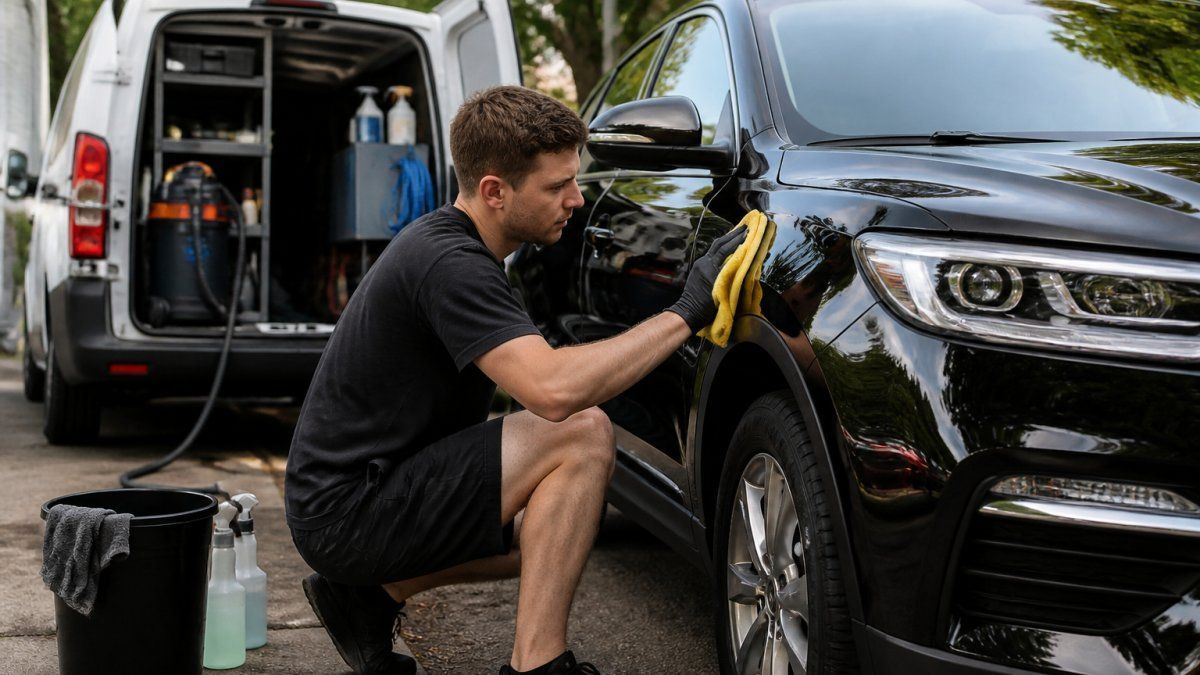
Deep stains in an SUV interior are stubborn, and some of them win. Detailing offers professional interior detailing services, with a fully equipped mobile unit that brings its own power and water to your home or workplace.
Frequently Asked Questions
How do you remove deep stains from SUV upholstery?
Start by vacuuming loose dirt, then apply a diluted dish soap solution or dedicated upholstery cleaner and let it sit for a few minutes. Agitate with a soft detailing brush, then blot with a clean microfiber towel. For stubborn SUV interior stains, use a portable extractor to flush out embedded soil, and repeat until the towel lifts clean. Always spot test on a hidden area first to check colorfastness.
Can I use Dawn to deep clean my car interior?
Dawn and similar grease-cutting dish soaps work as a mild soap solution for fabric seats and carpets when diluted with water. Use only a few drops per cup of water, since concentrated dish soap can leave residue that attracts more dirt. Avoid using it on leather, where it strips conditioning oils. For routine cleaning, a dedicated car interior stain remover is gentler and formulated for automotive surfaces.
What do professional detailers use to clean car interiors?
Professional interior detailing typically involves a multi-step process: dry vacuuming, compressed air for crevices, dedicated fabric or leather cleaners, drill brushes or detailing brushes for agitation, and hot water extraction with a wet vacuum. Steam cleaners are often used for sanitizing and loosening embedded soil. The exact products depend on the material, which is why material identification comes before any chemical is applied.
How can you remove stains from SUV carpet without soaking it?
Apply cleaner to your brush or towel rather than directly to the carpet, work in small sections, and blot immediately with a dry microfiber towel. Use a wet vacuum or portable extractor to pull moisture out instead of adding more liquid. Run the SUV's air conditioning on recirculate or park in direct sun with windows cracked to speed drying and prevent mildew.