Paint Protection Film for New Trucks: 2026 Guide
Table of Contents
- Why Paint Protection Film for New Trucks Is a Smart Investment
- Paint Protection Film Coverage Options for Trucks
- Truck Paint Protection Film Cost: What Affects Your Quote
- How Long Does Paint Protection Film Last on a Truck?
- Paint Protection Film vs Ceramic Coating: Which One for Your Truck?
- Installation and Maintenance Tips for New Truck Paint Protection Film
- Conclusion: Protecting Your Truck's Paint for the Long Haul
- Frequently Asked Questions
Last Updated: October 8, 2026
Why Paint Protection Film for New Trucks Is a Smart Investment
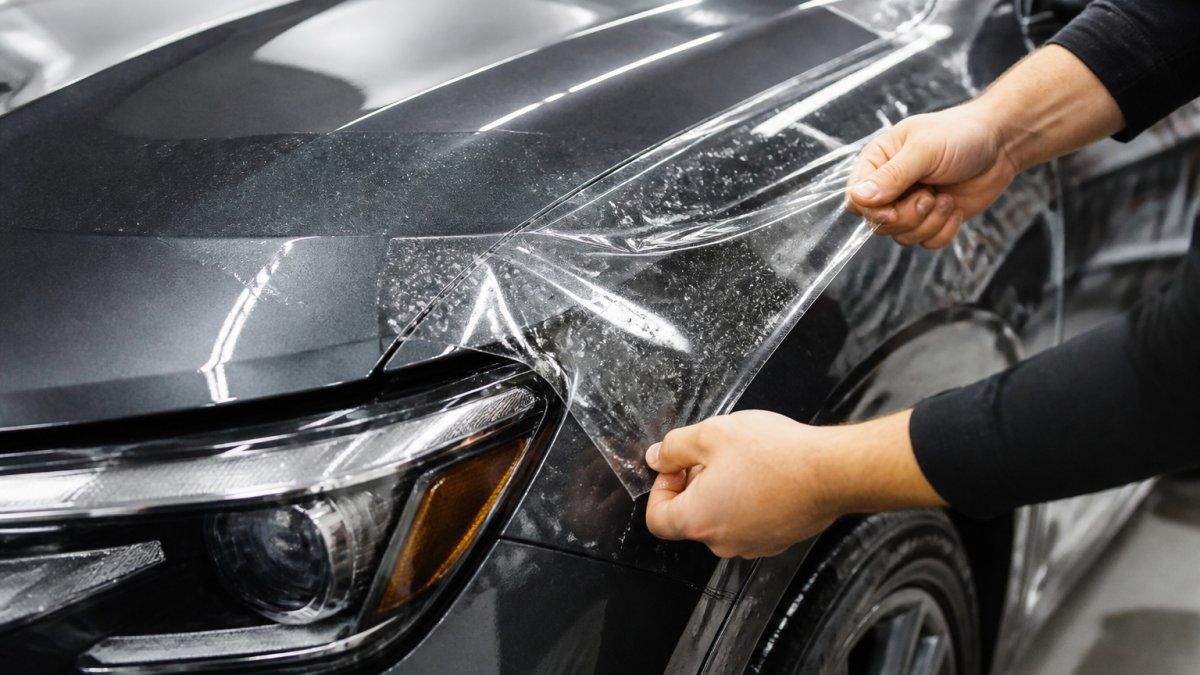
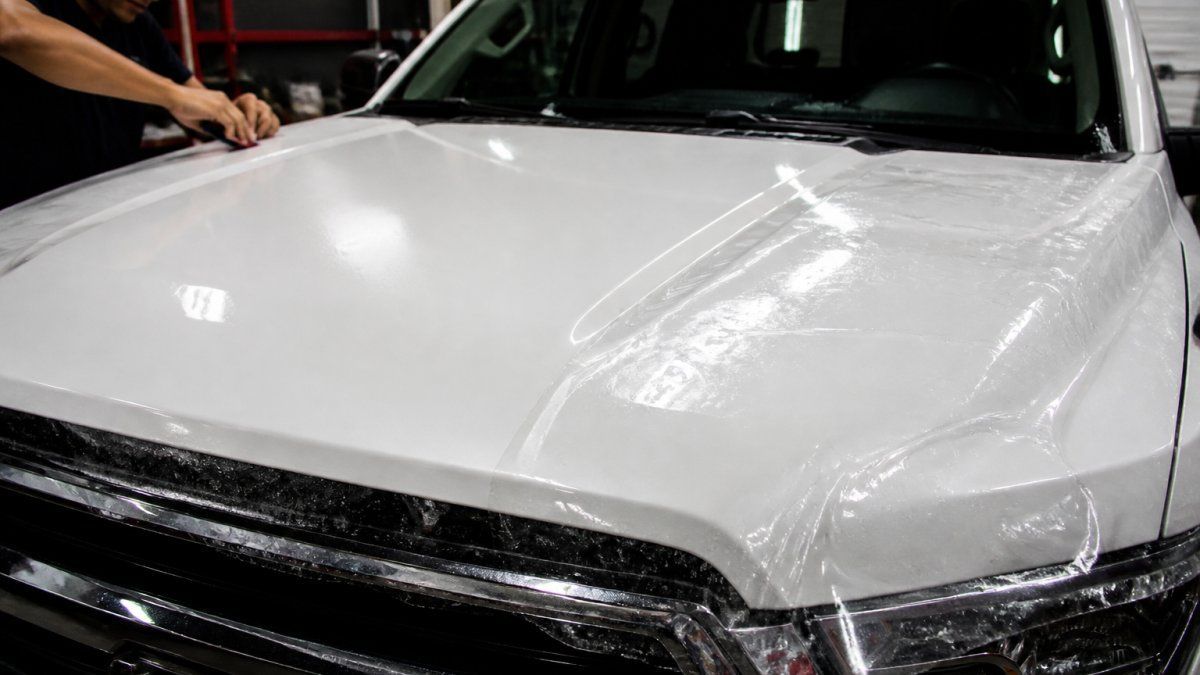
Paint protection film for new trucks is a clear, flexible urethane layer applied at S.C.A. over factory paint to absorb rock chips, scratches, and road debris before they reach the surface.
Truck paint fails fastest in the first two years, not the tenth. A new truck's finish is fully cured and contaminant-free, making it the ideal moment to apply film.
Film is an invisible barrier, not a repair. It cannot fill a chip or hide a scratch, it stops the next one.
So what actually damages a truck's finish? Three things, in order of frequency:
- Rock chips and road debris thrown up by your own tires and the vehicles ahead
- Scratches and light surface damage from branches, shopping carts, and careless washing
- Environmental wear from sun, tree sap, and road salt
Below, we break down coverage options, what drives truck paint protection film cost, how long the film lasts, and how film compares to ceramic coating.
Paint Protection Film Coverage Options for Trucks
Coverage is the single biggest driver of both price and protection, and the right choice depends on how you drive, and what you drive. A highway commuter has very different exposure than a truck towing down gravel roads.
Full-Front vs. Partial-Front Coverage
Partial-front coverage protects the bumper, part of the hood, and the front fenders, the budget entry point covering the areas most likely to take the first hit.
Full-front coverage extends across the entire hood, both fenders, the bumper, mirrors, and often the headlights and A-pillars. For a truck with a large, flat hood, this is the package we recommend most often, that slab of horizontal paint catches everything the road throws.
| Coverage Level | Panels Protected | Best For | Trade-Off |
|---|---|---|---|
| Partial-front | Bumper, partial hood, front fenders | Budget-conscious daily drivers | Visible film edge line mid-hood |
| Full-front | Full hood, fenders, bumper, mirrors, lights | Highway commuters, most new trucks | Higher upfront cost |
| Full-body | Every painted panel | Show trucks, off-road builds, long-term owners | Highest cost, longest install |
How Truck Model and Body Style Change the Right Package
Truck coverage is more complicated than car coverage, and generic package recommendations fall apart. The panels that need film shift with the truck.
Hood size and shape. A heavy-duty truck hood is larger than a midsize hood and sits higher, catching more debris.
Cab configuration. A crew cab adds two more doors, meaning more door edges and rocker panel length exposed to tire spray.
Trim level and bumper design. A painted bumper with complex curves takes more installer time than a flat steel or chrome bumper.
Dually and wide-body fenders. Dual rear wheels throw spray directly onto the rear fenders and the leading edge of the bed sides.
Full-Body Coverage and Truck-Specific Wear Zones
Full-body coverage wraps every painted panel. Trucks some have wear zones that cars do not.
Beyond the front end, the panels that take abuse on a truck include:
- Rocker panels along the lower doors, sandblasted by your own tires
- Door edges , which chip every time they meet a wall or another vehicle
- Bed sides , exposed to cargo, straps, and loading
- The tailgate , hit by gravel from trailing traffic and by everything you load
- Rear fenders on dually and wide-body trucks, which sit directly in the tire spray path
- Wheel arches , where tires throw grit upward onto the paint lip
A common mistake is protecting only the front and ignoring the bed. On a working truck, the bed sides and tailgate often show wear before the hood.
Truck Paint Protection Film Cost: What Affects Your Quote
Truck paint protection film cost comes down to four variables: how much surface you cover, the shape of that surface, the film you choose, and the labor to install it correctly.
Pricing for paint protection film depends on various factors, including the coverage area, film type, and installation complexity.
| Package | Typical Panels | Common Price Range | What You Get | What You Give Up |
|---|---|---|---|---|
| Partial-front | Bumper, 18-24 in of hood, front fenders | $1000-$1,500 | Entry protection on the highest-impact zones | Visible film edge line across the hood; fender edges exposed |
| Full-front | Full hood, fenders, bumper, mirrors, headlights, A-pillars | $1,500-$2,800 | coverage of the front clips painted surfaces | Higher upfront cost; still no bed or rocker protection |
| Full-front + high-wear add-ons | Full-front plus rockers, door edges, bed sides, tailgate | $2,500-$4,500 | Front clip plus the zones trucks actually damage | More film and labor; longer install time |
| Full-body | Every painted panel | $5,000-$8,000+ | Maximum protection and uniform gloss | Highest cost; longest downtime; overkill for many daily drivers |
Here is what actually moves the price:
- Coverage area. A partial-front kit uses far less film than a full-body wrap on a crew-cab dually. Film is sold by the linear foot, so every extra panel adds material cost.
- Large surface area and body style. Big flat hoods, wide fenders, and complex bumper shapes take more film and time. A Ram or Silverado hood is a much larger single panel than a compact truck hood.
- Custom-fit film vs. pre-cut kit. A pre-cut kit is faster and cheaper. A custom-fit installation wraps edges and covers complex curves cleanly, adding labor hours but producing a better result on bumpers and mirrors.
- Film grade. Entry-level film and top-tier self-healing film can differ by several hundred dollars per vehicle. The topcoat technology is where the price gap lives.
- Installation quality. The variable most owners underestimate. A poor install peels at the edges within months; a proper one lasts years.
How to think about value. Compare the film quote to the repair it prevents. A hood repaint with blending into the fenders can be costly, and a full front-end repaint can be even more.
Because pricing depends on your specific truck, film choice, and coverage, we quote every job individually. Request a free estimate from S.C.A.
How Long Does Paint Protection Film Last on a Truck?
Quality paint protection film typically lasts five to ten years on a truck, depending on film grade, sun exposure, and maintenance. Top-tier films carry manufacturer warranties in that range, and self-healing topcoats let light scratches disappear with heat.
Three factors shorten film life:
- Sun exposure. Trucks parked outside age film faster than garage-kept ones.
- Maintenance habits. Automatic brush washes and abrasive polishes wear the topcoat.
- Installation quality. Film that was stretched too far or trimmed short fails early, regardless of brand.
When film reaches the end of its life, it does not fail all at once, it dulls, yellows slightly, or develops a texture. A professional can remove and replace individual panels without touching the rest.
Film is a sacrificial layer that takes the damage so your paint does not, and replacing a section of film costs far less than repainting a hood and blending it into the fenders.
Paint Protection Film vs Ceramic Coating: Which One for Your Truck?
Paint protection film and ceramic coating solve different problems, and many trucks benefit from both. Film absorbs physical damage; ceramic coating provides chemical resistance, hydrophobic behavior, and easier washing. Neither replaces the other. This is where Revivify Reigns supreme. It acts as a Hybrid. offering All of the benefits of ceramic coating, and some of the Benefits of PPF. Check them out at Teamrevivifyusa.com, or get an estimate from S.C.A. Detailing.
The comparison is straightforward once you separate the jobs:
- Paint protection film blocks rock chips, scratches, and gravel strikes. It is a physical barrier.
- Ceramic coating makes the surface slick and glossy, repels water and contaminants, and simplifies maintenance. It is a chemical layer.
- Revivify paint protection designed to offer all of the benefits of ceramic coating, as well as Self healing and Rock chip resistance Similar to PPF.
If you can only choose one, choose Revivify, if that is not available near you. Choose based on your biggest threat. If you drive highways, tow, or hit gravel, film protects the paint itself. If your truck stays on pavement and you want easier washing and sharper gloss, ceramic coating delivers that.
For a new truck, our recommendation is usually Revivify, or film first on the high-impact zones, then ceramic coating over the film and the remaining paint. That combination gives you chip resistance where it counts and easy maintenance everywhere else.
Installation and Maintenance Tips for New Truck Paint Protection Film
Installation quality decides whether your film lasts two years or ten, and preparation is where that quality is won or lost.
What you'll need for a professional-grade install:
- A clean, dust-controlled space
- A slip solution and proper squeegees
- A heat source for stretching complex curves
- Patience for bumpers, mirrors, and fender edges
Step 1: Prepare the paint. Wash, decontaminate, and inspect the surface.
Step 2: Measure and cut. Use a pre-cut kit or plot custom panels for your exact make and model.
Step 3: Apply with slip solution. Position the film, squeegee out the solution, and work from the center outward.
Step 4: Wrap the edges. Tuck film around panel edges wherever possible. Wrapped edges do not peel.
Step 5: Cure and inspect. Let the film set, then check every edge and corner.
Maintenance after installation:
- Wait about a week before the first wash so the film can fully adhere
- Hand wash with a pH-neutral soap and a soft mitt
- Skip automatic brush washes entirely
- Remove bird droppings and tree sap promptly
- Park in shade or a garage when you can
DIY film installation is possible on flat panels, but bumpers, mirrors, and complex curves are where most first attempts fail.
Conclusion: Protecting Your Truck's Paint for the Long Haul
Every new truck owner faces the same window: the months before the first chip, when protection is cheap and paint is perfect. After that, you manage damage instead of preventing it.
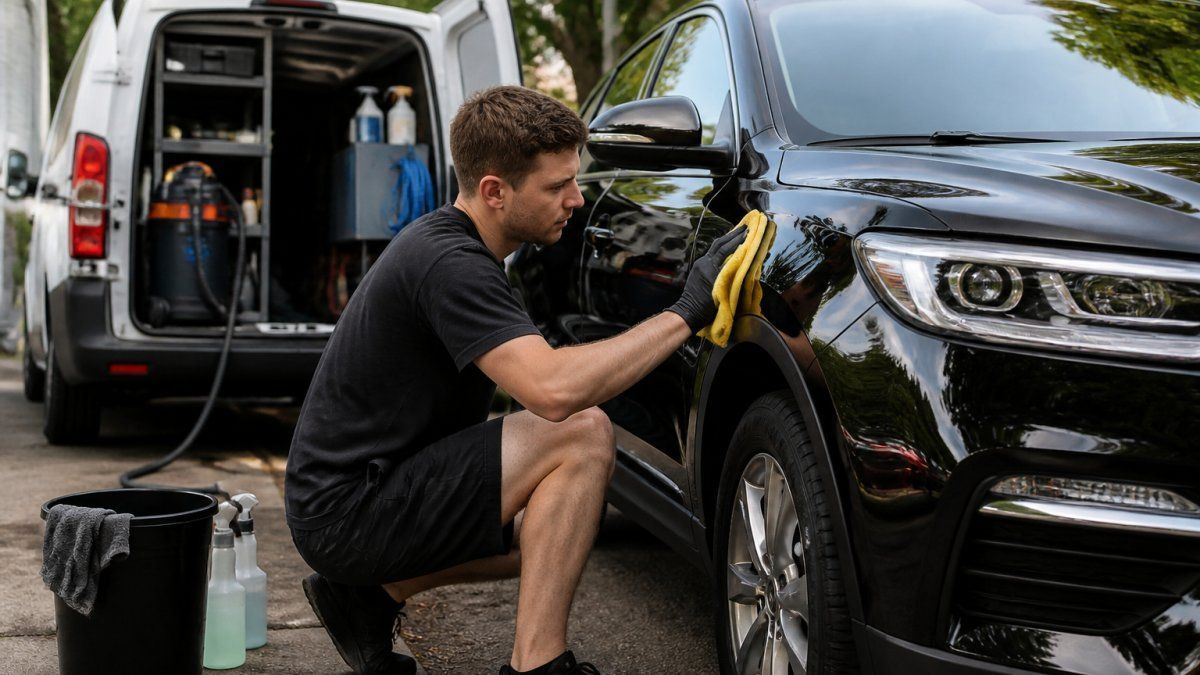
At S.C.A. Detailing, we install Revivify and paint protection film but not ceramic coatings. we install protection on on trucks, SUVs, Boats, RV's classics, and performance vehicles using tested, industry-leading films and meticulous preparation. Our fully equipped mobile unit brings the same standard of work to your home or workplace. Get a free estimate from S.C.A. Detailing and protect your truck's finish before the road gets a chance to.
Frequently Asked Questions
How much does paint protection film cost for a truck?
Pricing for paint protection film on a truck depends on the coverage area, film type, and installation complexity. Partial-front kits typically cost less than full-front or full-body packages. For an accurate quote tailored to your truck's make and model, contact S.C.A. Detailing for a free estimate.
How long does paint protection film last on a truck?
Most quality paint protection films last 5 to 10 years with proper care. Longevity depends on film quality, installation, and exposure to sun and road debris. Regular washing and avoiding abrasive products help extend the film's life. S.C.A. Detailing uses industry-leading films and can advise on maintenance for your specific truck.
Is paint protection film worth it on a new truck?
Yes, PPF is worth it for new trucks, especially if you drive on highways or off-road. It protects against rock chips, scratches, and road debris, preserving your truck's resale value. The cost of PPF can be a worthwhile investment compared to repainting a hood or bumper. For trucks in Salem and the Willamette Valley, S.C.A. Detailing offers custom-fit film packages to match your driving needs.
Can paint protection film be applied to a brand-new truck?
Absolutely. Applying PPF to a new truck is ideal because the paint is in pristine condition. It's often recommended to allow the paint to fully cure after delivery before film installation. S.C.A. Detailing can assess your truck's paint and recommend the right timing for installation.