How to Maintain Ceramic Coated Cars: 2026 Care Guide
Table of Contents
- How to Maintain Ceramic Coated Cars: The Core Routine
- The Best Car Wash Soap for Ceramic Coating
- Can You Clay Bar a Ceramic Coated Car?
- Ceramic Coating Maintenance Spray: When and How to Apply
- Tools, Two-Bucket Method, and Touchless Wash Options
- Seasonal Maintenance and Troubleshooting Stubborn Stains
- DIY vs. Professional Maintenance: What S.C.A. Detailing Recommends
- Frequently Asked Questions
Last Updated: October 2, 2026
How to Maintain Ceramic Coated Cars: The Core Routine
Learning how to maintain ceramic coated cars comes down to one habit: wash them gently and often. A coating is a sacrificial layer, not a force field. It takes the abuse so your clear coat doesn't have to, but it still needs care to keep working.
The good news is that proper care is simple once you know the rules.
Below, we'll show you exactly how to protect that investment, week by week and season by season.
Why the First 7 Days Matter
A fresh coating needs time to fully harden. During that curing time , keep the car dry as much as possible and skip the wash. Water, dust, and chemicals, and debris can interfere with the longevity of the coating.
After that window closes, you can wash normally. But the first week sets the tone for how long the coating lasts. Park inside if you can. Avoid puddles and rain when possible. Don't wipe the paint with a dry towel, since even light dust can drag across the surface and leave fine scratches.
These steps are less important with Revivify's Advanced chemical resistance, Self healing, and quick surface cure times. Contact us at S.C.A. Detailing to learn more about Revivify.
The Best Car Wash Soap for Ceramic Coating
The best car wash soap for ceramic coating is a pH-neutral, surfactant-based formula with no wax, no gloss enhancers, and no heavy solvents. The coating itself is a semi-permanent silica (SiO2) or graphene-oxide matrix; what breaks it down over time is not water but the wrong chemistry sitting on it, high-alkaline degreasers, acidic wheel cleaners, and wax-laden "wash and wax" products that leave an oily film across the hydrophobic surface.
Here is what to look for on the label:
- pH range: roughly 6.5 to 8.0. Anything above 10 (many all-purpose cleaners) or below 4 (some acid-based bug removers) will etch or dull a coating with repeated use.
- Surfactant type: look for "pH-neutral," "coating-safe," or "SiO2-infused" on the bottle. These lift road film without leaving residue that blocks water beading.
- No wax, no sealant, no gloss enhancer. These sit on top of the coating and mute the hydrophobic effect you paid for, leading to Etchings, water spotting, and gloss Degradation.
- Dilution: most concentrates run 1:100 to 1:400 with water. Follow the bottle, over-concentrating leaves streaks, under-concentrating means you are basically rinsing with soapy water.
What to Avoid: Dish Soap and Harsh Degreasers
Dish soap is the single most common mistake we see. It feels like a cheap fix, and it works for about a month. Then the beading stops and the paint looks flat. Dish soap is a high powered degreaser designed to strip surfaces of greases oils and grime.
The mechanism is simple: dish soap is engineered to strip grease, and a ceramic coating's top layer is a thin, oil-repelling film. Repeated dish-soap washes dissolve that film faster than any normal road grime would. The same goes for:
- Engine degreasers , far too alkaline for paint.
- Wash-and-wax products , the wax layer sits on top of the coating and dulls beading.
- Heavy-solvent "bug and tar" sprays , fine as a spot treatment, but not as a whole-car wash.
- Automatic car wash "triple foam" , often high-pH and loaded with gloss additives.
A dedicated ceramic coating maintenance spray and a proper soap cost a little more. They also protect a coating that took real work to apply. The Specialty Equipment Market Association's consumer resources is a solid starting point for understanding aftermarket product categories.
How Much Soap, and How Often
A common pattern among owners who get years out of a coating is a simple cadence:
- Weekly: one bucket of pH-neutral soap at the bottle's recommended dilution, two-bucket method, one wash mitt per zone.
- Biweekly to monthly: a coating-safe maintenance spray applied while the car is still damp, then buffed dry.
- Twice a year: a chemical decontamination (iron remover plus tar remover) followed by a reapplication of the maintenance spray.
Over-washing with the wrong soap is worse than under-washing with the right one. If you are unsure whether a product is coating-safe, test it on a small panel near the bottom of a door first, that is where damage shows up last and matters least.
Can You Clay Bar a Ceramic Coated Car?
Yes, with no pressure, you can clay bar a ceramic coated car, but only when the surface feels rough and only with plenty of lubrication. A clay bar removes bonded contaminants that washing can't lift. Used carelessly, it will mar your paint, and it also removes your coating.
Here's the safe approach:
- Wash and dry the car completely
- Spray a lubricant on a small test area
- Glide the clay bar with no pressure
- Wipe and check the surface
- Stop the moment it feels smooth
If the paint still feels gritty after claying, the coating may be failing. That's a job for a pro, not a driveway fix. A paint correction pass and a fresh coat are often the better answer.
Ceramic Coating Maintenance Spray: When and How to Apply
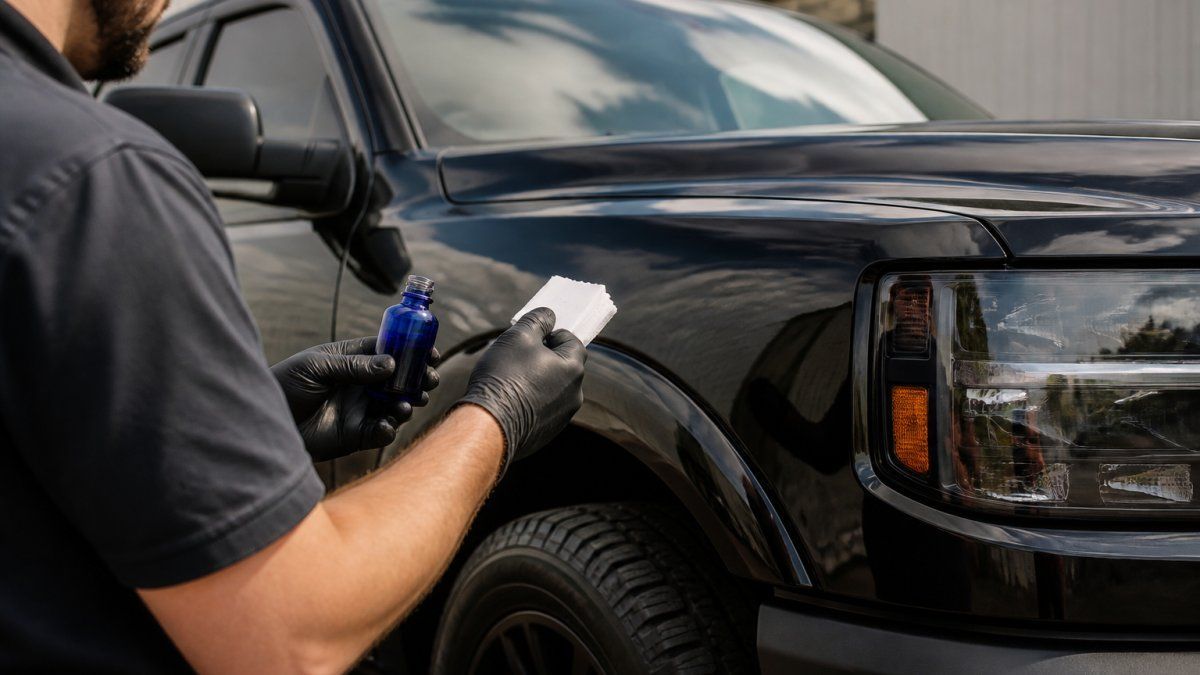
A ceramic coating maintenance spray adds a fresh layer of protection between full washes. Use it every two to four weeks, or right after a wash while the car is still damp.
How to apply:
- Mist the spray onto a clean, cool panel
- Spread it with a clean microfiber towel
- Flip the towel and buff to a streak-free finish
- Work one panel at a time
This top-up spray restores slickness and helps water sheet off. It also boosts chemical resistance against bird droppings, tree sap, and road film. Skip it and the coating wears faster.
Tools, Two-Bucket Method, and Touchless Wash Options
The right tools do more for a coating than any single product. The two-bucket method keeps grit out of your wash mitt, which is the main cause of swirl marks.
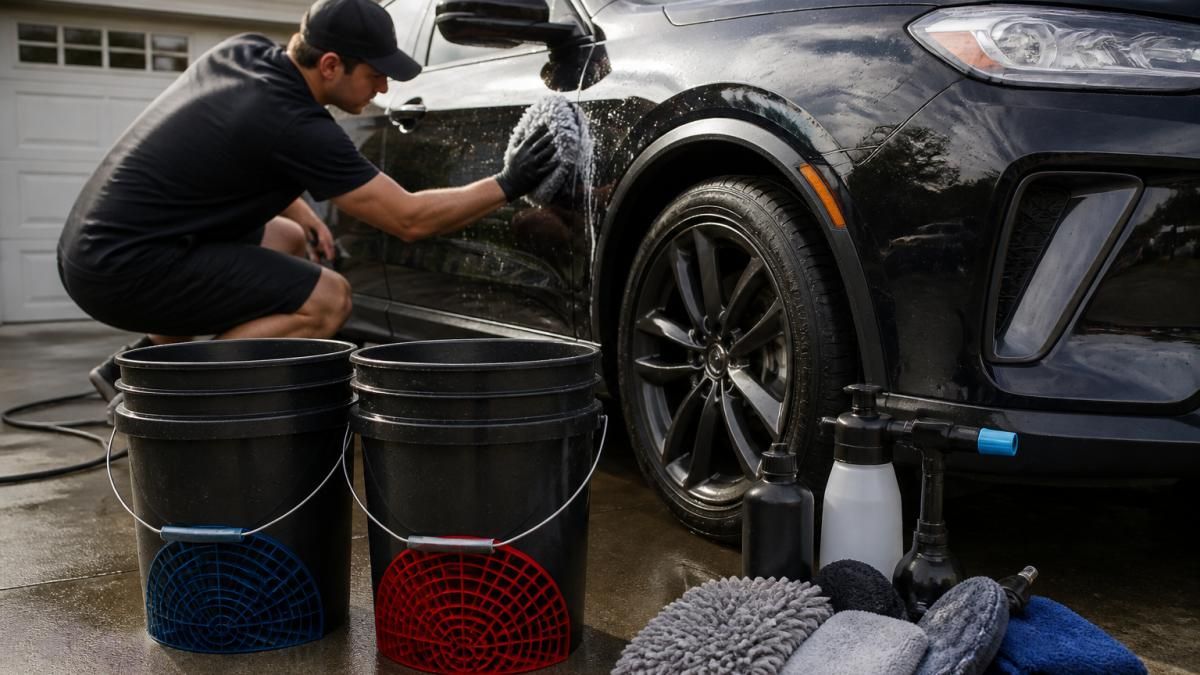
Set up like this:
- Bucket one: soapy water
- Bucket two: clean rinse water
- A grit guard in each bucket
- One wash mitt for the top, another for the lower panels
Microfiber, Grit Guards, and Drying Aids
Use plush microfiber towels and never let one touch the ground. Rinse your mitt in the clean bucket after every panel. For drying, a drying aid spray plus a large microfiber towel prevents water spots.
| Method | Best For | Risk Level | Frequency |
|---|---|---|---|
| Two-bucket hand wash | Weekly upkeep | Low | Weekly |
| Touchless wash | Quick cleanups | Low | As needed |
| Automatic brush wash | Never for coated cars | High | Avoid |
Seasonal Maintenance and Troubleshooting Stubborn Stains
Most guides treat coating care as one routine. In reality, the threats change with the season, and the contaminants that do the most damage need a specific removal sequence, not scrubbing.
Seasonal Adjustments
Winter (road salt and brine). Salt and brine sit on the surface and slowly work into the coating's pores. Rinse the lower panels, wheel wells, and undercarriage at least every two weeks, even if the rest of the car looks clean. Touchless bays are fine for this. Do not let salt sit for a month and then try to wash it off with a mitt, you will drag abrasive crystals across the paint.
Emergency Removal: A Step-by-Step Sequence
For any stubborn contaminant, the order is the same: soften, lift, neutralize, re-protect. Never scrape.
When to Stop DIY and Call a Pro
If a stain survives two rounds of the sequence above, or if the paint feels gritty after a wash, the coating may be compromised. That is the point to stop experimenting. A professional can assess whether the coating needs a light decontamination, a booster application, or a full re-coat, and can do it without removing what is left of the existing layer.
DIY vs. Professional Maintenance: What S.C.A. Detailing Recommends
DIY maintenance works for most owners. Wash weekly, top up monthly, and decontaminate twice a year. That routine keeps a coating healthy for years.
Frequently Asked Questions
Is it safe to take a ceramic coated car through an automatic car wash?
No. Automatic car washes use stiff bristles and harsh chemicals that scratch the clear coat and strip away the hydrophobic layer. Even touchless washes use strong detergents that can degrade the coating over time. Hand washing with a pH-balanced soap and the two-bucket method is the safest way to clean ceramic coated cars and preserve the beading effect.
Can you clay bar a ceramic coated car?
You can, but only when the surface feels rough and contaminated. Use a fine-grade clay bar with plenty of lubrication and light pressure. Aggressive claying can mar the coating or leave residue that blocks hydrophobic properties. If the coating is still beading well, a chemical decontamination with iron remover is gentler and usually enough.
How often should I apply a ceramic coating maintenance spray?
Apply a maintenance spray every 4 to 8 weeks, or after each wash if you drive in harsh conditions. A silica-based top-up spray restores surface tension, boosts beading, and adds a sacrificial layer that protects the coating from contaminants. Always apply to a clean, cool surface and buff off with a clean microfiber towel for a streak-free finish.
What products should I avoid using on a ceramic coated car?
Avoid dish soap, abrasive polishes, and any cleaner with harsh solvents or high pH. Dish soap strips the coating's hydrophobic layer and leaves residue. Skip automatic car washes and stiff-bristle brushes. Also avoid waxes that sit on top of the coating and mask its properties. Stick to pH-balanced soaps, iron removers, and dedicated maintenance sprays.
Ceramic coatings reward owners who stay consistent. Wash gently, top up often, and call a pro when the surface stops feeling slick. S.C.A. Detailing offers self-healing ceramic coatings, paint protection film, and paint correction, backed by a mobile unit, spot-free water, and yearly training. Get started with S.C.A. Detailing and keep your finish looking new for years.